
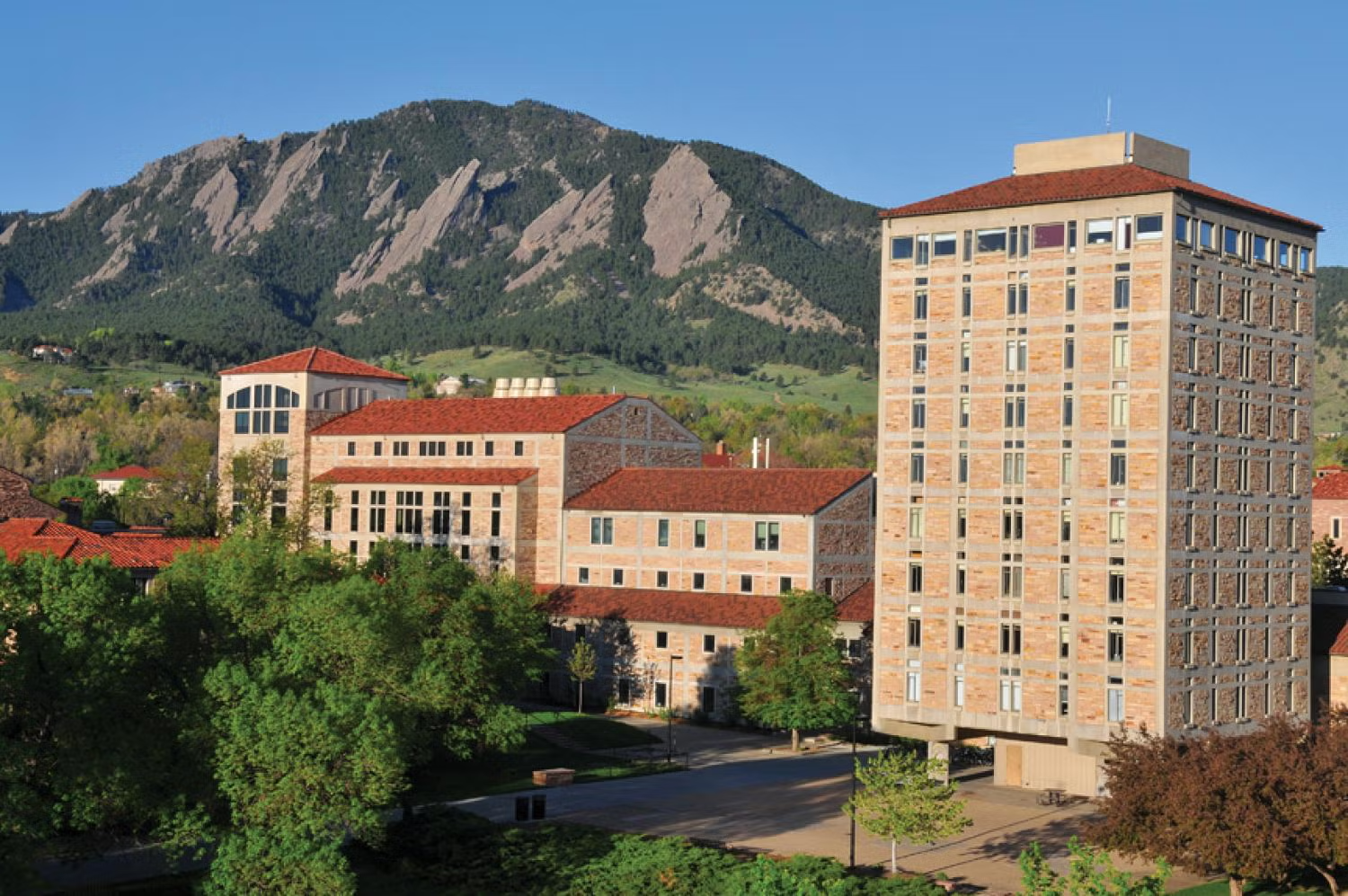

They hold the talent pipeline, the research infrastructure, physical space, and often the civic credibility that ecosystems need to grow, but they don’t always know how to connect those assets to the entrepreneurs, investors, and industry partners forming around them. And the ecosystem, for its part, doesn’t always know how to find the most relevant “front door” because there are so many silos across a campus.
When research finds commercial application, when students find founders and see opportunities to become builders, when faculty find industry partners, the whole region benefits. When it doesn’t, the assets sit idle.
That gap has been a consistent pattern in every city and state where I’ve worked. The question that drives my engagement with universities has never been “what can this institution do for the ecosystem?” It has been more specific: what does this university already value, and how do we build on that?

Connecting Ohio’s Universities to Industries
As CEO of Cintrifuse, the public-private partnership building Southwest Ohio’s and Northern Kentucky’s innovation ecosystem, I worked closely with a range of higher education institutions and learned quickly that not all universities play the same role.
Southwest Ohio’s higher education landscape illustrated something I’ve come to think of as the full spectrum of university types: community colleges focused on trades and technical training, undergraduate-focused institutions building entrepreneurial pipelines, and full-stack urban research universities doing all of it at once. Each academic institution contributes differently. Understanding which one you’re working with (and what it’s actually positioned to do) determines the type of partnership that is possible.
Northern Kentucky University (NKU) exemplified what a well-positioned regional institution could become. With a nationally recognized cyber program and a ranking among Newsweek’s top online colleges, NKU was doing advanced technical work that directly served the region’s workforce needs. Institutions like NKU are the core infrastructure for any ecosystem. Their students were a significant contributor to startups and big companies alike.
Two university programs in particular showed what genuine integration between academia and industry could produce when the conditions were right.
At Miami University, Dr. Tim Holcomb (now CEO of Embarc Collective) built something genuinely distinctive at the John W. Altman Institute for Entrepreneurship: a program focused on teaching students to “do” entrepreneurship rather than teaching them “about” it. The difference matters. The faculty connected students directly to the regional ecosystem — to organizations like Cintrifuse, CincyTech, and Flywheel Social Enterprise Hub — and each year, more than 450 angel investors, venture capitalists, accelerator directors, and startup founders engaged directly with Miami students and their companies. The results were concrete: student-led companies collectively raised more than $12 million in venture funding over four years. One of them, OROS — a performance outerwear company built on NASA-inspired Aerogel insulation technology — generated $10 million in sales across more than 100 countries within three years of launch, with cofounders named to Forbes 30 Under 30.
At the University of Cincinnati (UC), the 1819 Innovation Hub took a different approach — one organized around physical space and interdisciplinary collision rather than a curriculum. Under David Adams (UC’s first-ever innovation officer and who is now the Indiana Secretary of Commerce) the 1819 Hub became a place where students, faculty, and industry professionals could work together on ideas that none could advance alone. The institutional insight behind 1819 was important: the disconnect between academic research and commercial application wasn’t primarily a funding problem or a talent problem; it was a proximity problem. Putting the right people in the same room, organized around shared problems rather than institutional affiliations, proved sufficient to close a significant portion of that gap.

Connecting Colorado’s Universities to Industries
Colorado’s universities sit at the center of one of the most consequential moments in the state’s economic history. With Elevate Quantum’s Tech Hub designation, a growing clean energy sector, and 30+ federal labs driving advanced research across the Front Range, the question of how universities connect to the ecosystem around them has never been more urgent.
CU Boulder is Colorado’s flagship campus for federal research, with deep concentrations in four vectors: space, quantum, sustainability, and biotech. The assets are extraordinary — including a partnership with National Institute of Standards and Technology (NIST) through a collaboration called JILA that has produced four Nobel Prizes and sits at the heart of quantum physics research in the country. What became clear through my work with CU Boulder was that this extraordinary research depth represented an enormous opportunity for deeper ecosystem integration. The assets were there. What was still developing was the connective infrastructure to link that research to the commercial and entrepreneurial activity forming around it, particularly along the aerospace and defense corridor running from Boulder down Highway 36 to I-25 and south to Colorado Springs, one of the densest concentrations of space and technology in the country. Closing this gap is precisely where ecosystem builders can add great value to an institution.
The quantum ecosystem in particular, has been an active area of development. CUBIT — an initiative supporting quantum research conditions inside the university — and COQI, the Colorado Quantum Incubator funded through the state’s tax credit program, represent early infrastructure for a quantum cluster that could be nationally significant. The density is there: JILA, CUBIT, COQI, and Elevate Quantum’s Tech Hub designation, all within the same corridor. What that cluster needs now is ecosystem development to match its research depth.

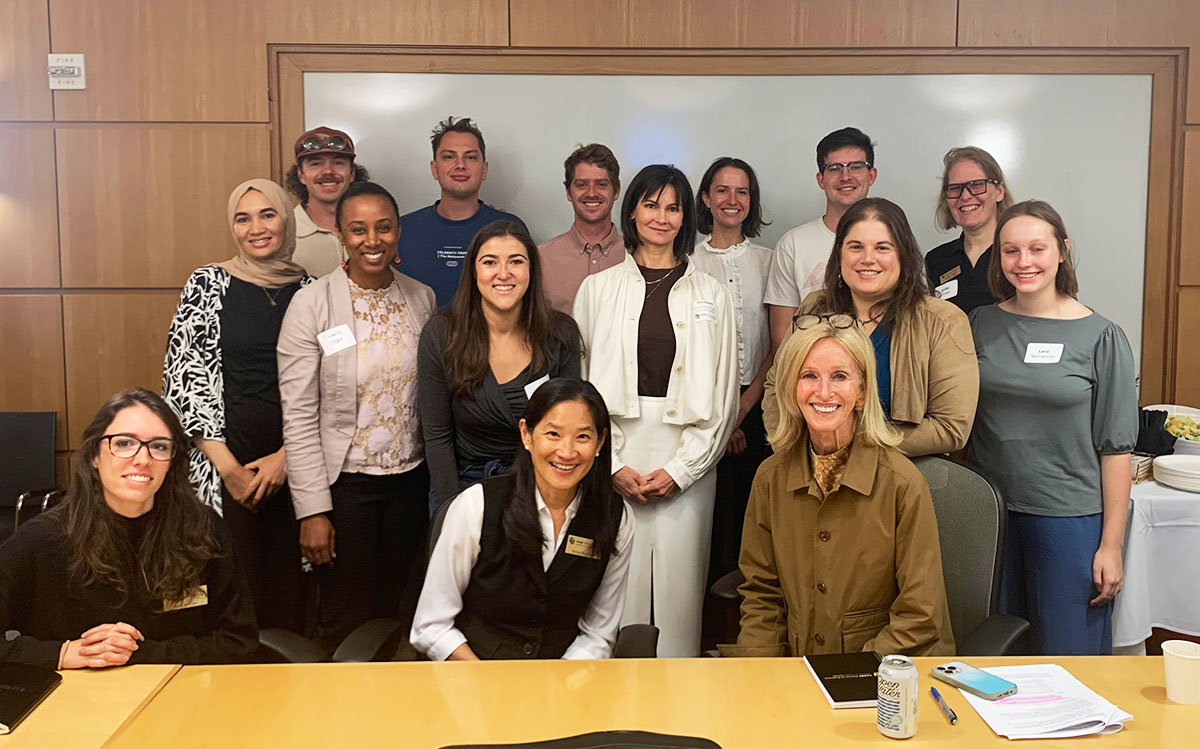
In September 2025, Leeds School of Business at CU Boulder named me its inaugural Community Leader-in-Residence — bringing civic leaders into direct engagement with students, faculty, and staff around the challenges facing Colorado’s innovation economy. Over two days of sessions, the conversations were grounded in questions focused on topics such as what Colorado’s quantum economy will require of business school graduates, how to bridge the research-to-commercialization gap, and how to strengthen connections between Front Range and rural entrepreneurial communities. What the program reflects is a broader institutional shift in perspective: a business school’s role is not just to prepare students for careers, but to be an active participant in the civic and economic life of the region it calls home.
Alongside Leeds, another CU Boulder program deserves attention for what it reveals about how research universities can function as genuine startup engines. Venture Partners at CU Boulder, led by Bryn Rees, helps researchers and post-docs do something most academic institutions struggle to support: launch companies, build teams, access capital, and scale. In 2024, CU Boulder launched a record-setting 35 startups based on university research, placing it at the top of the nation for commercializing university discoveries. Those startups (including Mana Battery and Flari Tech) span cleantech, biotech, and quantum technologies which align with the advanced industries Colorado is building its next economic chapter around.
Joining the Colorado School of Mines Board of Trustees
In January 2026, Governor Polis appointed me to the Board of Trustees of Colorado School of Mines, where I will serve a three-year term through December 2028.
Mines has a unique position in Colorado’s ecosystem. As one of the country’s most specialized engineering and applied science universities with deep strengths in energy, materials science, and quantum information science, it sits at the intersection of the research, workforce, and industry partnerships that will determine how far Colorado’s advanced technology economy can go.
This appointment represents an opportunity to ensure that the connective tissue between the university and the broader ecosystem continues to strengthen, and that Mines’ research priorities, institutional strategy, and workforce pipelines are shaped through genuine dialogue with the entrepreneurs, policymakers, and civic leaders working within it.

A university as consequential as Mines, fully integrated into that effort, is a significant force multiplier for Colorado.
The Connective Work is the Work
What a decade of university engagement has reinforced is that the distance between academic expertise and real-world application isn’t primarily a structural problem. It’s a relationship problem. Researchers and entrepreneurs don’t naturally find each other. Faculty and industry leaders don’t always speak the same language. Students don’t always know that the skills they’re developing are exactly what the ecosystem around them needs.
University assets are among the biggest contributors to ecosystem success, but only when someone is doing the connective work. Ecosystem builders can change that by showing up inside institutions, aligning missions before pitching partnerships, and creating the conditions that let universities lean into what they already value: interdisciplinary thinking, rigorous inquiry, and a genuine commitment to the communities around them.